AEO for B2B: answer the questions behind the shortlist
Neaptide · September 7, 2026 · 5 min read · Updated: October 4, 2026
Connect B2B buying questions to evidence using Claude API Citations: documented capabilities, format limits and implementation questions.
On this page

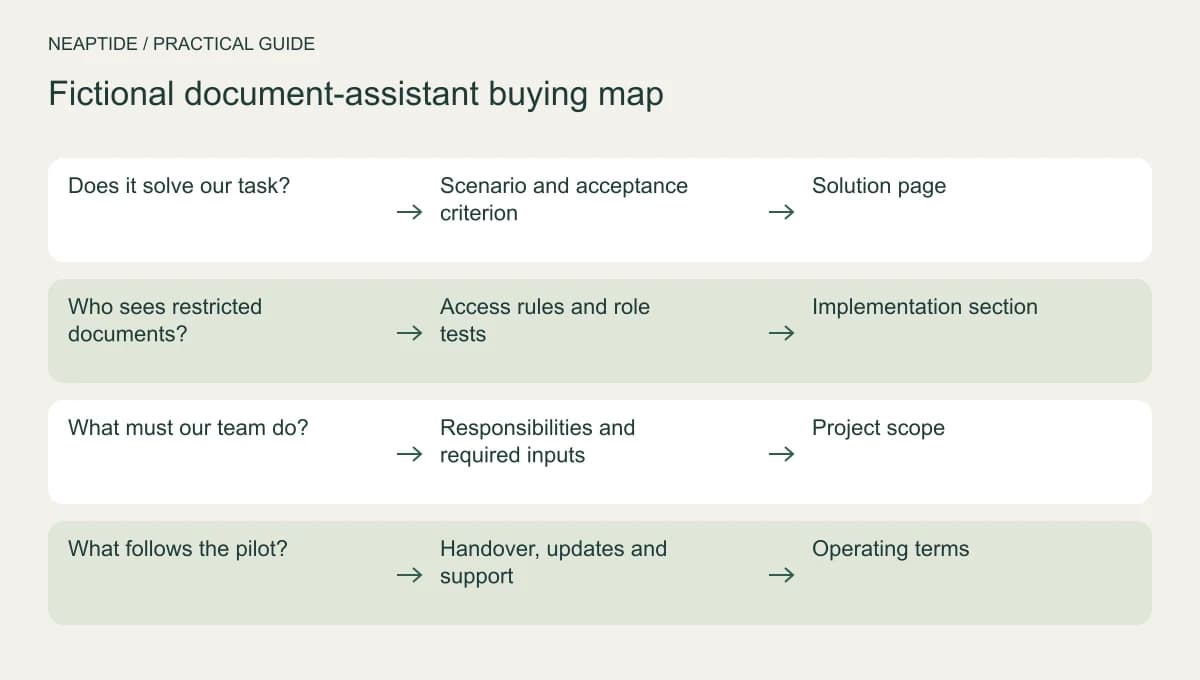
A business buyer needs more than a service description. They may have to explain to colleagues how the proposal fits existing work, who can access data and what the team will have to contribute. Start B2B AEO with those questions, not with a list of AI platforms where you would like a mention.
Map the decisions within one project
Take a company choosing an internal document assistant. The department wants useful answers. IT needs to understand access and updates, and procurement needs to know what the contract covers. In practice one person may carry several of these responsibilities.
Collect real questions from project discussions and lost opportunities, with personal details removed. Keep each question apart from the sales message. “Will it work with our system?” needs compatibility conditions, not “flexible integrations”.
Connect each question to evidence
For a real example, use Citations in the Claude API. The documentation checked on 3 October 2026 gives specific answers about formats, configuration and citation limits. This is a documentation review, not a test of a complete enterprise assistant.
| Question | Documented answer | Where to check |
|---|---|---|
| Which material can be cited? | Plain text, PDF text and custom content blocks | Supported document types |
| How is it enabled? | Set citations.enabled: true on the document | How citations work |
| How is a passage located? | Character indices for text; pages for PDF; block indices for custom content | Citation types |
| What about scanned PDFs? | PDFs without extractable text cannot use image citations | PDF documents |
Make prerequisites visible
Say who the solution is for and what the customer needs to prepare. If the pilot requires someone to maintain the knowledge base, the customer should learn that before the first meeting. Do not promise to handle every document before checking formats, permissions and source quality.
Separate the supplier’s work from the customer’s responsibilities. For the assistant, those might include document preparation, access approval, test questions and acceptance. The project team has to confirm the scope. The example is not a universal package.
Help people verify the evidence
Link a claim to documentation, a sample deliverable or a relevant case. A successful pilot in one department does not establish company-wide readiness. Where evidence is confidential, explain how it can be reviewed and leave it unpublished.
Google advises making important information available as text. So summarise the key conditions on the page. Do not leave the entire answer inside a presentation image.
Check whether the recommendation is accurate
Write test questions that include the conditions buyers care about, such as data types, existing systems and user roles. Keep the questions, settings and answers. If a mention credits the company with an unverified certification or integration, it needs investigating, however flattering it looks.
Track enquiries that fit your services and progress to a project discussion. To connect those enquiries with AEO you also need evidence of where they came from. A list of buying questions does not demonstrate sales growth. To begin with Neaptide, choose one priority service and collect the questions customers need answered before they decide.