Car dealership SEO: ninefold organic traffic growth in five months
August 19, 2026 · 6 min read
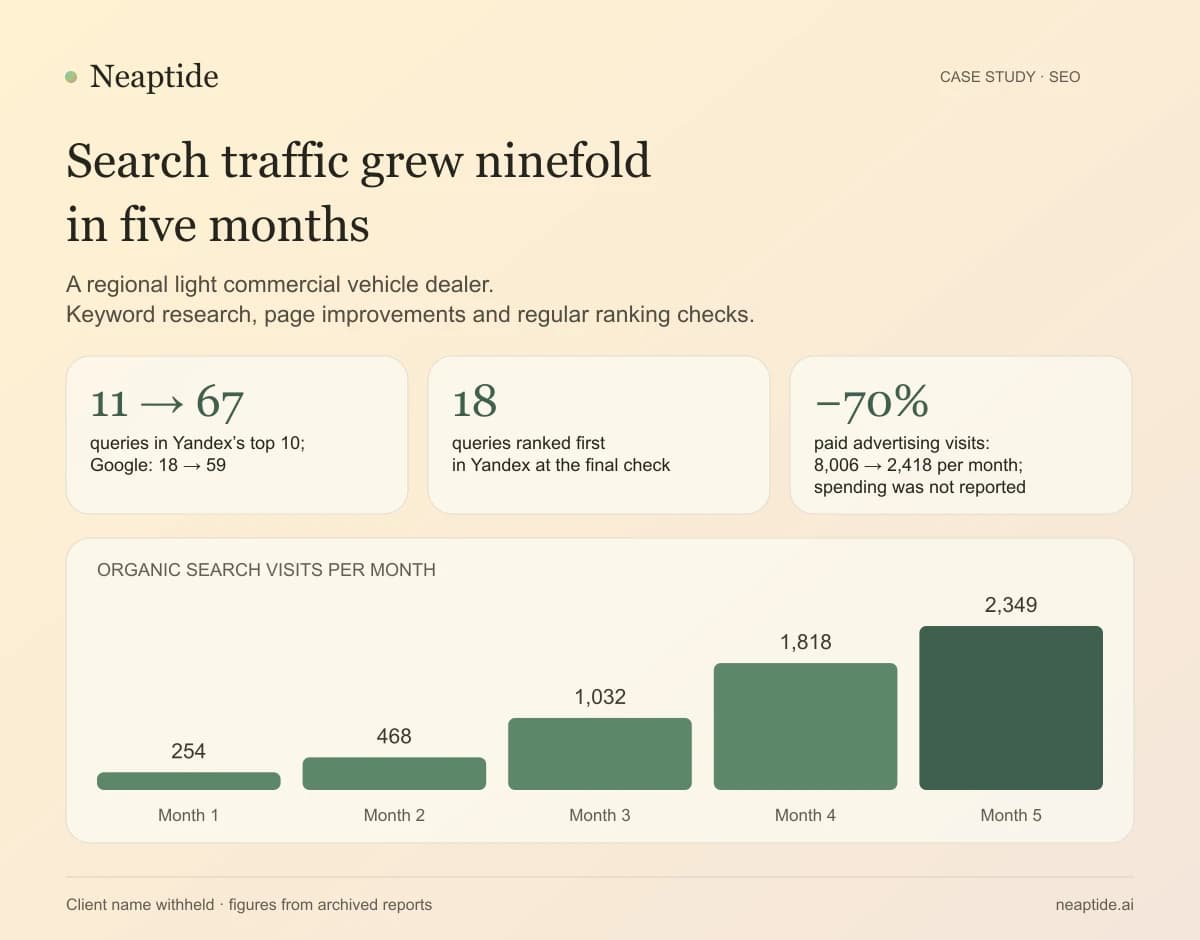
A regional light commercial vehicle dealer increased organic visits from 254 to 2,349 a month. Tracked queries in Yandex’s top 10 rose from 11 to 67. Data from archived reports.
In this case study
This case comes from our archive: a regional dealer of light commercial vehicles, handling sales, servicing and parts. Over five months, organic traffic grew ninefold and the number of tracked queries in Yandex’s top 10 rose from 11 to 67. Visits from paid search fell by 70%. The company name, city and domains are withheld, and the figures come from the original reports.
Where the website started
The selected keywords had a combined monthly search volume of about 47,500. They included “buy [model] in [city]”, “[model] price” and “official [brand] dealer in [city]”. Of the initial 181 queries, 11 ranked in Yandex’s top 10 and 18 in Google’s. Another 137 were outside the tracked range. Paid search, meanwhile, brought roughly 8,000 visits a month.
Keyword research, page structure and links
We selected about 190 commercial queries covering vehicle models, servicing and parts, and assigned a page to each group. We then revised page structure, copy and metadata. Within one month, links were placed on more than 300 reviewed sites. That is what was done on a historical project. We would not recommend repeating that link-building method today.
How rankings and traffic changed
- Queries in Yandex's top 10: 11 (February) → 49 (March) → 59 (April) → 67 (May) out of ~190 tracked.
- By May: 28 queries in the top 3, 18 ranked #1; 59 in Google's top 10.
- Organic traffic by month: 254 → 468 → 1,032 → 1,818 → 2,349 visits (five consecutive months).
- By May, queries in the top 10 accounted for 30,879 of the selected keywords’ 47,553 monthly searches, or 65% of their combined search volume.
- Main-site traffic: March 4,318 → April 5,694 visits (+32%).
Organic and paid-search traffic
Monthly organic visits rose from 254 to 2,349, a 9.2-fold increase. Paid-search visits fell from 8,006 to 2,418, a reduction of about 70%. These are traffic figures. Without ad-spend, conversion and sales data, they cannot show a 70% budget saving, or that each organic visit replaced a paid click.
“80% of our sales now come from the internet,” the dealership’s owner said during our work together. The client’s name is withheld. This is the client’s assessment of online sales, separate from the traffic measurements shown above.
What the data supports
The reports show gains in rankings and organic traffic during the project. They cannot isolate the effect of each change or tell us the return on the SEO budget. Keyword research, page structure and regular measurement are still useful for planning. But this is a historical case: it does not predict today’s results and says nothing about visibility in AI answers.