Appliance store SEO: all 25 selected queries in the top 10
August 19, 2026 · 4 min read
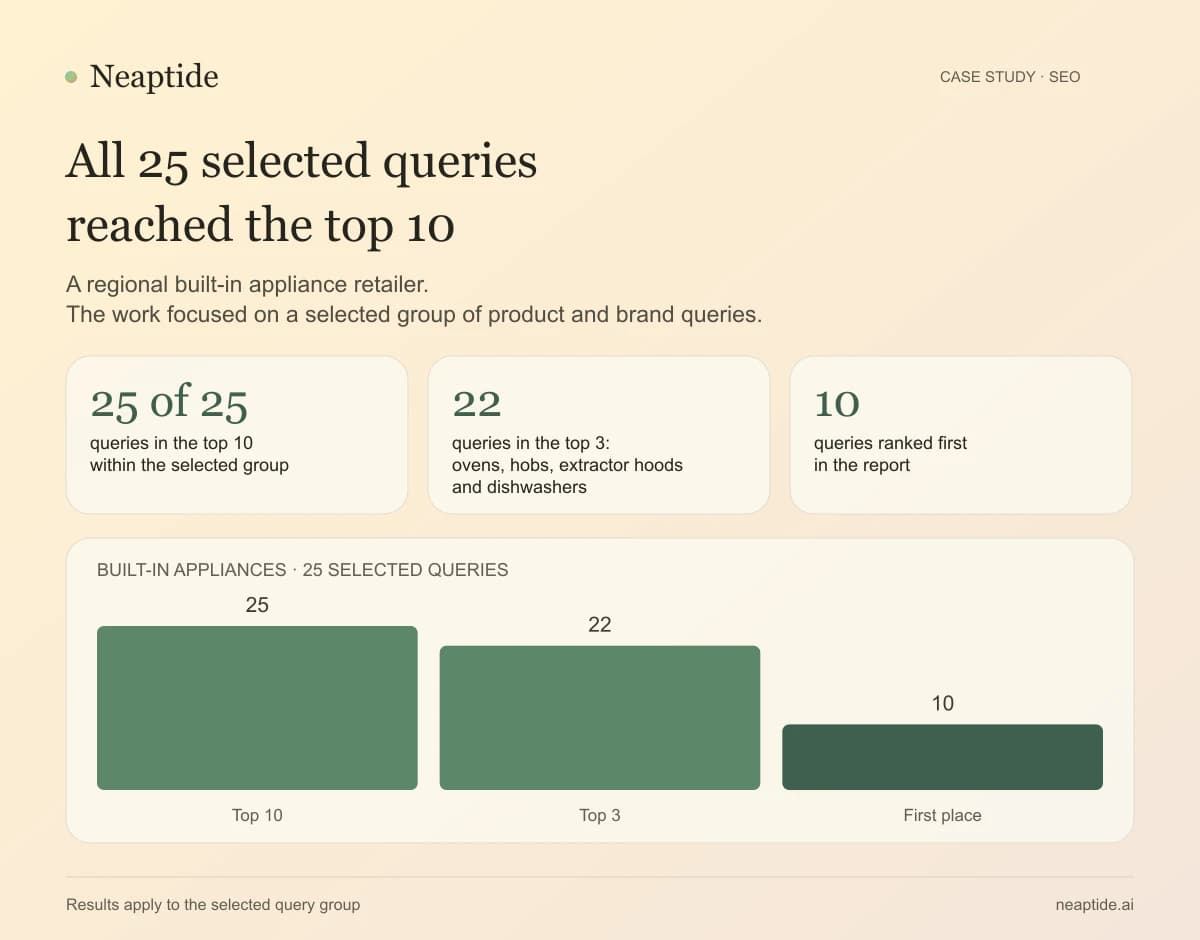
A regional built-in appliance store ranked in Yandex’s top 10 for all 25 queries in the selected group. Of these, 22 were in the top 3 and 10 ranked first. Results from archived reports.
In this case study
This case comes from our archive: a regional store specializing in built-in appliances. The budget was limited, so the project stuck to queries about ovens, cooktops, hoods, dishwashers and specific brands. The store’s name and city are withheld, and the figures come from the original reports.
Choosing a focused keyword group
The store could not match national chains’ budgets for broad searches such as “buy a fridge”. So keyword research, site structure and content all went into its specialty: built-in appliances and the brands it stocked.
Results for the selected queries
- All 25 queries in the selected built-in appliance group reached Yandex’s top 10.
- Of those, 22 were in the top 3 and 10 ranked first.
- Across the full tracked list of 35 queries, including broader terms such as “dishwashers”, 32 were in the top 10 and 24 in the top 3.
- Almost all brand-specific queries (“built-in appliances [brand]”) ranked first or second.
Broad searches such as “split systems” and “coffee machines” stayed outside the leading positions. The budget went to the selected appliance group first. Later checks recorded further gains on some queries: kitchen hoods moved from position 16 to 6, and cooktops from 14 to 5.
Reaching the top 10 for all 25 selected queries is a result for that keyword group. It does not mean that the website reached every buyer or covered every search in the market.
What the data supports
The reports show one thing: a focused group of product queries ranked well in this project, and broader queries proved harder. They say nothing about sales, return on investment or AI answers, and they do not promise another store the same rankings.