B2B SEO: 86.5% visibility for regional powder-coating queries
August 19, 2026 · 4 min read
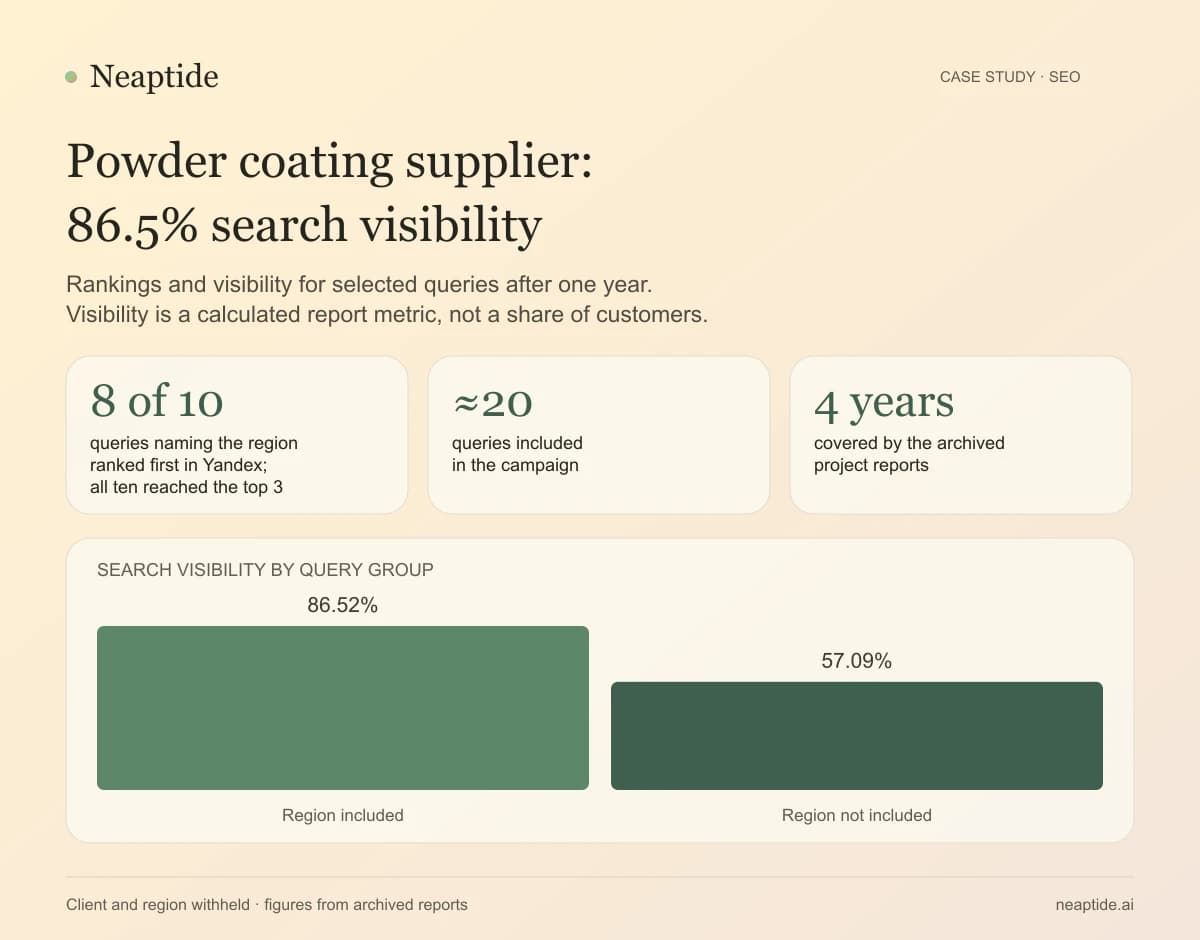
After a year, a powder-coatings supplier ranked first in Yandex for 8 of 10 queries that included a region. Reported visibility for that group was 86.52%. The archive spans four years.
In this case study
This case comes from our archive: a regional supplier of powder coatings to manufacturers. Buyers searched by product, price and supply region. We worked with a small list of commercial queries. The company name and region are withheld, and the figures come from the original reports.
The initial rankings
For the main term, “powder coating”, the site was outside the tracked range. Some queries containing “buy” or “for sale” ranked between 27 and 36 in Google. The first pages of results for those searches belonged to competitors.
Working with a small keyword list
We selected about 20 queries combining the product with terms such as “buy”, “price”, “for sale” and the region. We adjusted the site structure and wrote content for procurement teams. Alongside that we worked on external links and checked rankings regularly.
Rankings and visibility after one year
- Region-specific queries began entering Yandex’s top 5 a week after the first measurement.
- After a year, all ten region-specific queries were in Yandex’s top 3, including eight at number one. Google rankings for the group ranged from second to eighth.
- The report recorded visibility of 86.52% for the regional group and 57.09% for the group without a region. In the latter group, four of five queries ranked first.
- The archive contains reports covering four years. The client came back for further work, including a new website, and its keyword group ranked well too.
Visibility summarizes rankings and search volume for a selected keyword group. A score of 86.52% does not mean that 86.52% of buyers visited the site or bought from the supplier.
What the data supports
The reports show strong rankings for the selected commercial queries and a client who kept working with us. They say nothing about market share or return on investment, and results differed by query and search engine. The case predates AI search work, so it contains no measurements of AI recommendations.